Fictional Minds by Alan Palmer
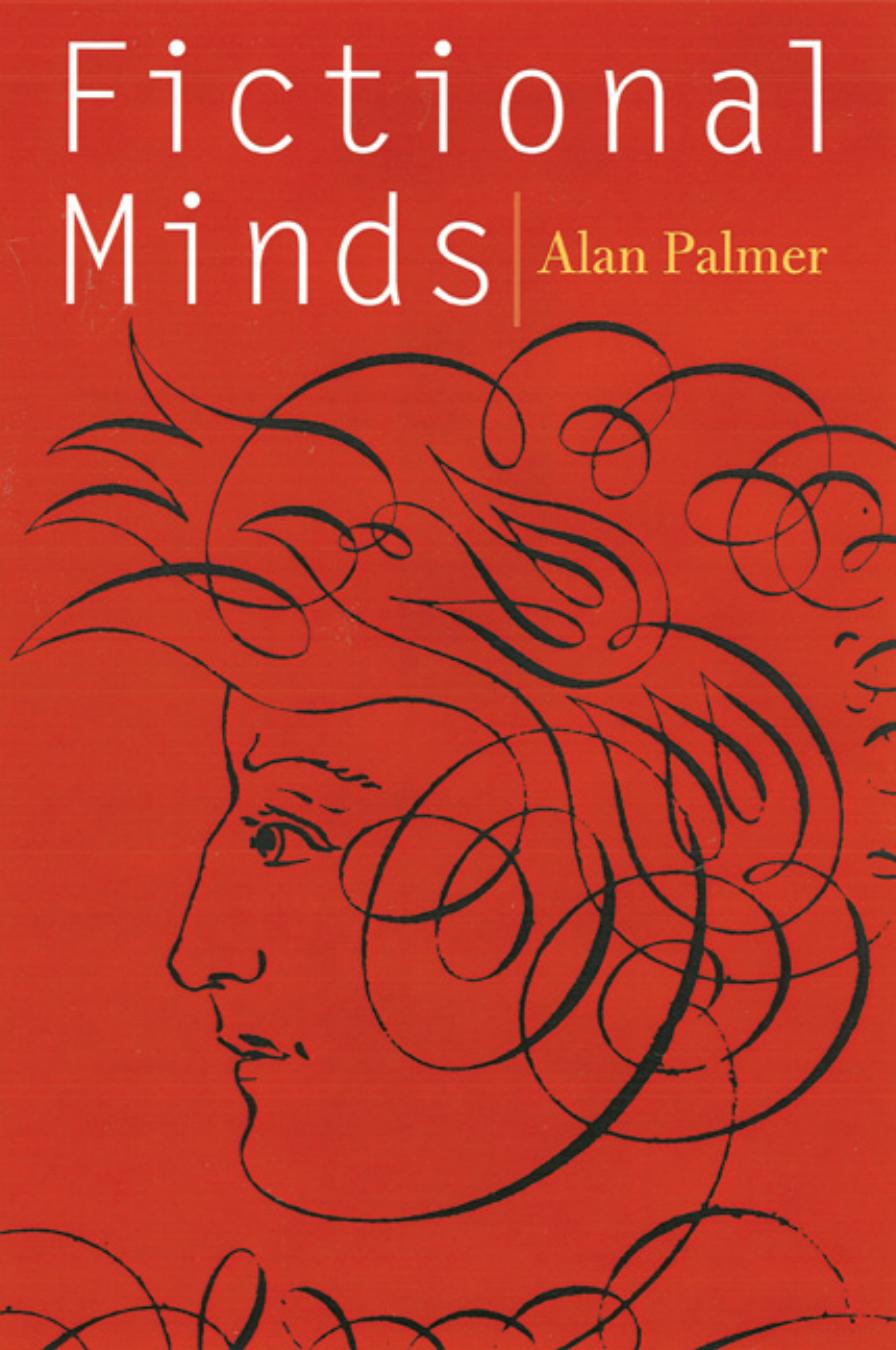
Author:Alan Palmer
Language: eng
Format: epub, pdf
2. Third-Person Ascription
This section continues the discussion of ascription that began in the previous chapter but with the emphasis this time on the third person rather than the first person. The attribution to the character by the narrator of motives, dispositions, and states of mind is at the center of the process of constructing fictional minds and is central to the reader process of comprehending texts. Thought
138 The Social Mind
report is the chief mode for ascription. This section is closely linked to the previous one: as we have seen, the more public our thought, the easier and more reliable third-person ascription becomes. Empathy is the power of entering into another’s personality and imaginatively experiencing their experiences. It is an essential part of the reading process, and this discussion will, I hope, provide some theoretical background to this ability. Consider this statement by Colwyn Trevarthen, in which he compares the relative levels of reliability of first- and third-person ascription: “Conscious monitoring of intersubjective motives is asymmetric; in normal circumstances we are more aware of others’ feelings and intentions than of our own inner states” (1999, 416). Even with the benefit of earlier discussions, you may still be so taken aback by this statement that you will wish to read it again in order to check that you did not misread it. It states quite baldly that third-person ascription is the more reliable kind. It does not say that reliability varies: sometimes one kind is more accurate and at other times the other is. It says that “in normal circumstances” the accuracy of our views about the mental states of others exceeds the accuracy of our views about our own mental states. Suddenly, the ability that we have as readers to construct fictional minds out of a minimum of information does not seem quite so extraordinary.
Not everyone develops the ability to ascribe mental states to others. One of the chief symptoms of autism is mind-blindness: the inability to recognize that other people have minds. This is a severe and real form of the philosophical doctrine of solipsism, “the view or theory that only the self really exists or can be known. Now also, isolation, self-centeredness, selfishness” (oed). Descartes’ famous “Cogito, ergo sum” is the most famous practical demonstration of the theoretical solipsistic methodology. However, solipsism also takes what might be called a practical or operational form. Autism is the most severe variety, but it is also a well-known symptom of the milder Asperger’s Syndrome. In addition, there is the very large number of people whose behavior is so selfish that they appear not to believe in the existence of other minds. Driving through London in the rush hour (or at any time, in fact) will illustrate this point quite forcibly.
A number of philosophers have considered the role of behavior in forming what they call the third-person nature of consciousness. According to them, it is a necessary condition of attributing states of consciousness to oneself that one must be prepared to attribute them
Download
This site does not store any files on its server. We only index and link to content provided by other sites. Please contact the content providers to delete copyright contents if any and email us, we'll remove relevant links or contents immediately.
4 3 2 1: A Novel by Paul Auster(12412)
The handmaid's tale by Margaret Atwood(7778)
Giovanni's Room by James Baldwin(7360)
Asking the Right Questions: A Guide to Critical Thinking by M. Neil Browne & Stuart M. Keeley(5785)
Big Magic: Creative Living Beyond Fear by Elizabeth Gilbert(5784)
Ego Is the Enemy by Ryan Holiday(5461)
The Body: A Guide for Occupants by Bill Bryson(5108)
On Writing A Memoir of the Craft by Stephen King(4951)
Ken Follett - World without end by Ken Follett(4745)
Adulting by Kelly Williams Brown(4585)
Bluets by Maggie Nelson(4569)
Eat That Frog! by Brian Tracy(4551)
Guilty Pleasures by Laurell K Hamilton(4461)
The Poetry of Pablo Neruda by Pablo Neruda(4116)
Alive: The Story of the Andes Survivors by Piers Paul Read(4038)
White Noise - A Novel by Don DeLillo(4021)
Fingerprints of the Gods by Graham Hancock(4013)
The Book of Joy by Dalai Lama(3998)
The Bookshop by Penelope Fitzgerald(3859)
